Is Linkin Park: Unshatter Worth Seeing in Theaters? Full 2026 Movie Review
There was a strange silence around Linkin Park after Chester Bennington died in 2017. Not just the usual silence that follows the loss of a musician, but something heavier. For years, there was no obvious answer to what came next for Mike Shinoda, Brad Delson, Dave “Phoenix” Farrell, and Joe Hahn. Would they make music again? Would they ever perform together? Or had Linkin Park become one of those bands whose story simply ended when its defining voice was gone?
Then, slowly, things started moving.
The 2024 album From Zero changed the conversation, as did the arrival of Emily Armstrong and Colin Brittain and the announcement of a new world tour. What had seemed impossible suddenly became real. Now, in September 2026, that second chapter reaches the big screen with Linkin Park: Unshatter, a feature-length documentary and concert film directed by Joe Hahn with Mark Ritchie.
The film is scheduled for a limited theatrical release on September 30, 2026, with Trafalgar Releasing and CJ 4DPlex handling distribution. It promises backstage material, footage from the band’s private studio sessions, conversations about the years following Chester’s death, and a major live performance from São Paulo. That’s enough to make any longtime fan curious, but curiosity isn’t quite the same thing as buying a movie ticket.
The real question is whether Unshatter needs a theater.
After looking at the film’s story, the band’s live material, the early fan reaction, and the premium-format presentation, the answer depends heavily on what you want from a Linkin Park documentary.
What Is Linkin Park: Unshatter Actually About?
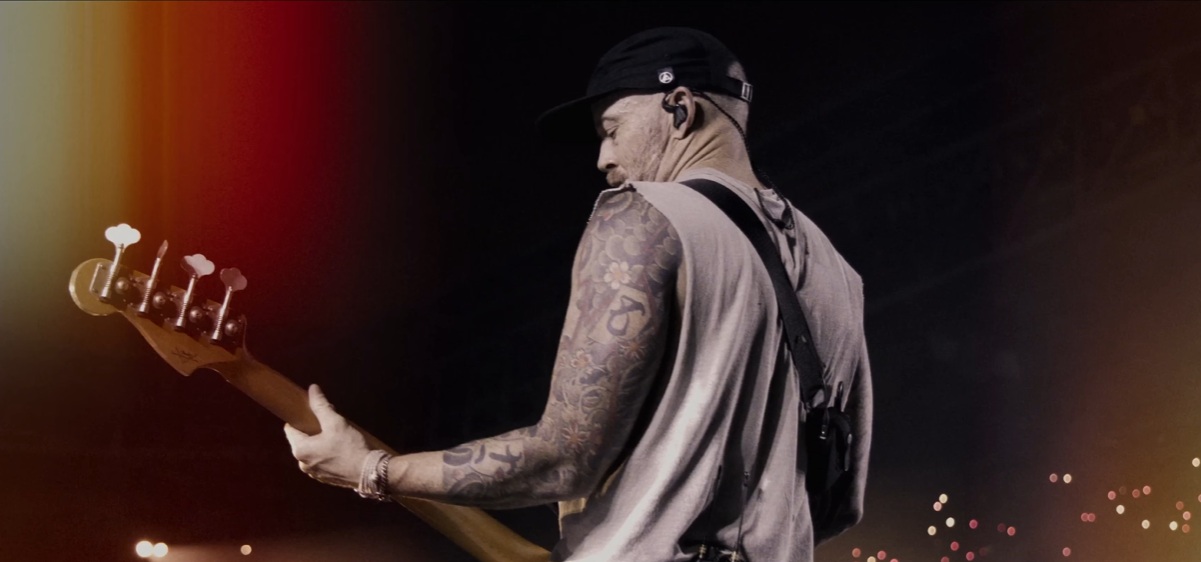
Unshatter isn’t built like a conventional concert movie. The live performance matters, obviously, but the film spends a lot of time on what happened before the band ever returned to a stage. That gives it a different rhythm from a simple collection of songs stitched together with backstage footage.
The story begins during the years when Linkin Park was still trying to figure out what life looked like without Chester. Mike Shinoda, Brad Delson, Dave Farrell, and Joe Hahn are shown dealing with grief, uncertainty, and the uncomfortable question of whether continuing was even possible. The film doesn’t pretend that the answer came easily, and that’s important because the entire From Zero era becomes more understandable once you see how hesitant that process was.
One of the more interesting pieces of the timeline involves the private studio sessions that began in 2022. These weren’t initially presented as the grand return of Linkin Park. The members were simply making music together again, without knowing where those sessions would lead or whether they would eventually release anything under the Linkin Park name.
That uncertainty gives the early sections some weight. The band wasn’t sitting around waiting for the perfect comeback moment. They were testing whether they could even make music together again.
From there, the documentary follows the arrival of Emily Armstrong and Colin Brittain, the preparation for the new lineup, the public announcement, and the creation of From Zero. Eventually everything leads toward the São Paulo performance, where the private experiment becomes a very public new version of Linkin Park.
It’s a fairly simple timeline on paper. Emotionally, it isn’t.
The Hardest Part Is What Comes After Chester
This is the part of Unshatter that was always going to attract the most attention.
Linkin Park returning without Chester was never going to be treated as a normal lineup change. Some fans have struggled with the idea from the beginning, while others have seen the band’s return as a way for the surviving members to keep creating instead of allowing tragedy to define the rest of their careers. Those reactions exist side by side, and the film doesn’t really have the luxury of pretending otherwise.
The better choice is that it acknowledges the discomfort.
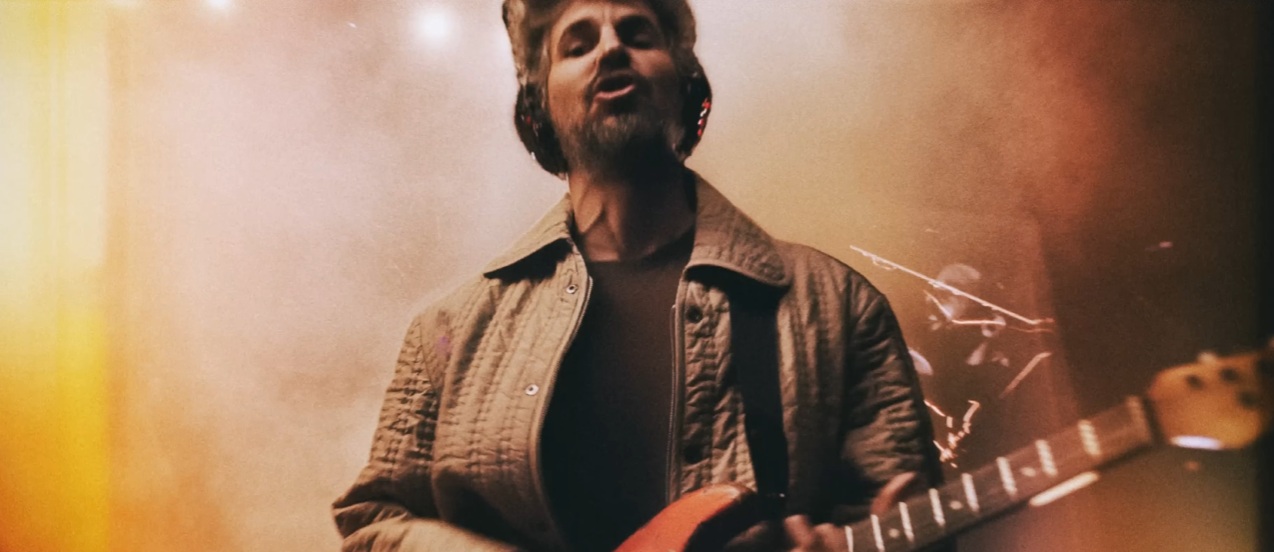
Mike Shinoda talks about the fear surrounding a return to the stage and the possibility of being rejected by the very audience the band wanted to reconnect with. That fear is one of the more convincing elements of the documentary because it makes the comeback feel less calculated. These aren’t musicians casually announcing a new era and moving on. They’re people who know exactly what has changed and understand that millions of listeners are going to have very strong feelings about it.
The film also spends time with the idea that starting again can be almost as frightening as ending something. That theme runs through the interviews and the rehearsal footage without needing to be hammered into the audience every few minutes.
Joe Hahn’s direction helps here. His familiarity with the band gives the camera access to moments that feel less formal than the usual promotional documentary interview. The best scenes aren’t necessarily the big emotional speeches. Sometimes it’s the hesitation before someone answers, the look across a rehearsal room, or the quiet concentration before a song begins.
That’s where Unshatter feels most like a film rather than an extended promotional feature.
Emily Armstrong and Colin Brittain Have a Lot to Prove
Emily Armstrong was always going to be under a microscope.
Taking over songs originally associated with Chester Bennington means stepping into a catalog that has enormous emotional baggage attached to it. There is no clever way around that. Every scream, every familiar chorus, every pause before a lyric gets compared with something that happened years ago.
Unshatter understands the pressure Armstrong is under and gives her enough space to explain how she approached the job. The rehearsal material is particularly useful because it shows the work behind the performances rather than simply presenting the finished result.
She isn’t trying to imitate Chester, and the film doesn’t frame her as a replacement. That’s probably the only approach that could make sense. Armstrong has her own delivery, her own physical presence onstage, and a rougher vocal edge that changes the feel of some of the older material.
Colin Brittain has a quieter role in the narrative, but his arrival matters just as much to the band’s new sound. His drumming brings another kind of momentum to the live performances, especially when the songs are pushed harder than their studio versions.
The São Paulo footage is where the new lineup has to stand on its own.
And it does.
The companion Unshatter Film Soundtrack (Live in São Paulo), released on September 25, contains 20 tracks, mixing songs from From Zero with older material including “Papercut,” “In the End,” and “Waiting for the End.” The album gives you a useful preview of what the movie’s concert sequences are trying to accomplish.
The sound is big. Very big.
Armstrong’s vocals are gritty without losing the cleaner sections, while Brittain’s drumming gives the performances plenty of physical force. What matters most isn’t whether the new lineup reproduces the old one perfectly. It doesn’t, and trying to do that would probably make the whole project feel lifeless. The interesting part is hearing how these musicians have changed the shape of songs that fans thought they knew by heart.
Does Unshatter Actually Need a Theater?
This is where the movie gets more interesting.
A documentary about a band can work perfectly well on a television. In fact, most of us are probably going to watch music documentaries that way. Put on some headphones, turn the lights down, and you’re done.
But Unshatter is being positioned differently.
CJ 4DPlex is offering premium presentations including ScreenX and 4DX, alongside standard 2D screenings. Those formats aren’t going to magically make the documentary better, but they can change the way the concert material feels.
ScreenX
ScreenX expands parts of the image onto the walls on either side of the main screen, creating a much wider field of view. During the São Paulo sequences, that means the crowd becomes part of the visual composition instead of remaining background decoration.
That could work extremely well for Linkin Park.
A stadium concert is partly about scale. The band is important, but so is the mass of people singing every word back at them. If the ScreenX presentation uses that extra space intelligently, the effect should be closer to sitting inside the audience rather than watching the show through a television-sized window.
4DX
4DX is a different proposition entirely. The seats move and vibrate, while effects such as lighting and motion are synchronized with what is happening on screen.
For a serious documentary purist, that may sound ridiculous.
For a rock concert, though, I can see the appeal.
The physical movement is obviously not going to add anything to an interview about grief or songwriting. During the São Paulo performances, however, the combination of bass, drums, crowd noise, flashing stage lights, and moving seats turns the film into something closer to a concert attraction.
Whether that’s worth paying extra for depends entirely on how much you enjoy that kind of presentation. Some people will find it immersive. Others will spend half the movie wondering why their chair is shaking.
The important distinction is that these experiences are temporary. Once Unshatter leaves theaters, you can recreate the sound and picture at home, but you can’t recreate a ScreenX auditorium or a 4DX seat in your living room.
What Are Fans Saying?
The early online response has been intense, particularly among longtime Linkin Park fans. Discussions on fan forums have focused heavily on the previously unseen studio material and the possibility of seeing how the surviving members actually processed the years between Chester’s death and the band’s return.
That material is arguably more interesting than another collection of famous concert clips. Fans already know what Linkin Park looked like onstage. What they haven’t seen in the same way is the uncertain period when nobody knew whether the band would ever return.
There is also a noticeable split in how people approach the new lineup. Some fans remain primarily attached to the original era and aren’t interested in a Linkin Park without Chester. Others have embraced From Zero as its own chapter and seem more interested in seeing where the new lineup can go.
The film can’t resolve that disagreement, nor should it try.
What it can do is document what actually happened.
That makes the documentary more valuable than a simple celebration of the comeback. The doubts are part of the story. So are the awkward moments, the pressure around Armstrong, and the knowledge that every new song would be judged against decades of history.
Who Should See It in Theaters?
If you’re trying to decide whether to spend money on the theatrical release, your relationship with the band probably matters more than any review score.
The theatrical experience makes particular sense if:
- You’ve followed Linkin Park for years and want to experience the band’s return alongside other fans.
- You’re interested in the previously unseen studio material from the early stages of the reunion.
- You have access to ScreenX or 4DX and specifically want the concert footage presented as a large-scale event.
- You care about live sound and want to hear the São Paulo performance through a proper cinema audio system.
Waiting for a home release may make more sense if:
- You’re only interested in the original Linkin Park lineup and don’t want to spend much time with the From Zero era.
- You want a complete history of the band, from Hybrid Theory through the present. Unshatter isn’t really that movie.
- Your local cinema has weak sound and an ordinary screen, because much of the theatrical appeal comes from the scale of the presentation.
Heart of the Beast Ending Explained: Do James and Odin Survive the Alaskan Wilderness?
Final Thoughts
Linkin Park: Unshatter is most compelling when it stops trying to prove that Linkin Park is back and simply shows what it took to get there. The grief, the hesitation, the private studio sessions, and the pressure surrounding Emily Armstrong all give the comeback more context than a standard concert film could provide.
The São Paulo performance then gives the story its release. You get the familiar songs, the new material, the enormous crowd, and a band that has clearly decided it doesn’t want to spend the rest of its existence looking backward.
That’s also why the movie won’t work for everyone. If your idea of Linkin Park ends in 2017, there probably isn’t much here that will change your mind. If you’re curious about what happened after that, though, the behind-the-scenes material is the real reason to show up.
And yes, the theater matters. A good screen, a powerful sound system, or a premium format can make the concert sections hit much harder than they would on a laptop. But the strongest reason to see Unshatter isn’t the moving chair or the giant screen. It’s the chance to watch a band confront an ending that seemed final and figure out what could possibly come after it.
For Linkin Park fans, that’s a story worth seeing on a big screen.