Heart of the Beast Ending Explained: Do James and Odin Survive the Alaskan Wilderness?
Released in September 2026, David Ayer’s Heart of the Beast wastes very little time putting James Belmont and Odin in a situation where almost everything can kill them. Written by Cameron Alexander from a script featured on the Hollywood Black List, the film follows a 58-mile trek through the Alaskan wilderness after a seaplane crash leaves the retired Special Forces veteran and his combat-trained German Shepherd completely cut off from civilization. Brad Pitt plays James with the kind of restraint that makes the character’s history feel heavier than any exposition could. Odin, meanwhile, is not simply the dog accompanying him. He is James’s last real connection to the life he had before the war.
On paper, this is a survival thriller about cold, hunger, injuries, rivers, predators, and the constant possibility that one wrong decision will end the journey. Yet the movie keeps steering back toward something more personal. James and Odin are both veterans, both carrying scars from military service, and both struggling with the damage that followed them home. That gives the wilderness another purpose. It becomes the physical version of everything James has spent years trying not to face, which is why the question of whether they survive matters so much more than a simple body count.
There is also a very deliberate decision behind the film’s handling of Odin. Anyone who has watched enough survival movies knows the fear that comes with introducing a beloved animal into the story. The audience starts waiting for the inevitable. Heart of the Beast plays with that expectation from the start, and the way it does so changes how the entire final act lands.
The Narrative Setup: Two Veterans Lost in the Wild
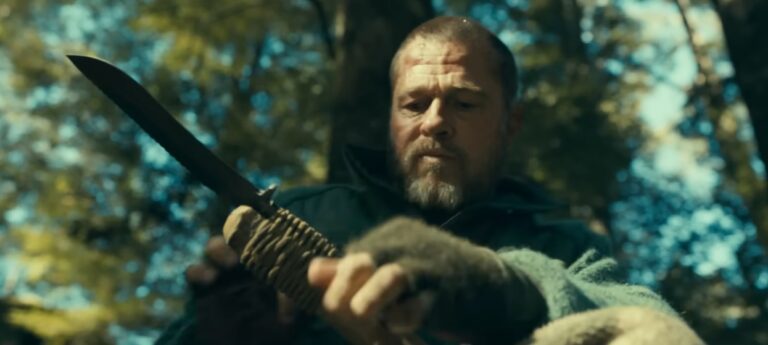
Understanding the ending means going back to the relationship between James and Odin before the crash. James is a retired Special Forces soldier who has clearly spent years carrying the psychological consequences of combat. Odin has his own history of service, and the film makes a point of showing that his wounds are not metaphorical. During an early conversation with Walter, played by J.K. Simmons, James explains that Odin still has silver dental work from an injury suffered during deployment. It is a small detail, but it says plenty about how the movie views them: neither came home untouched.
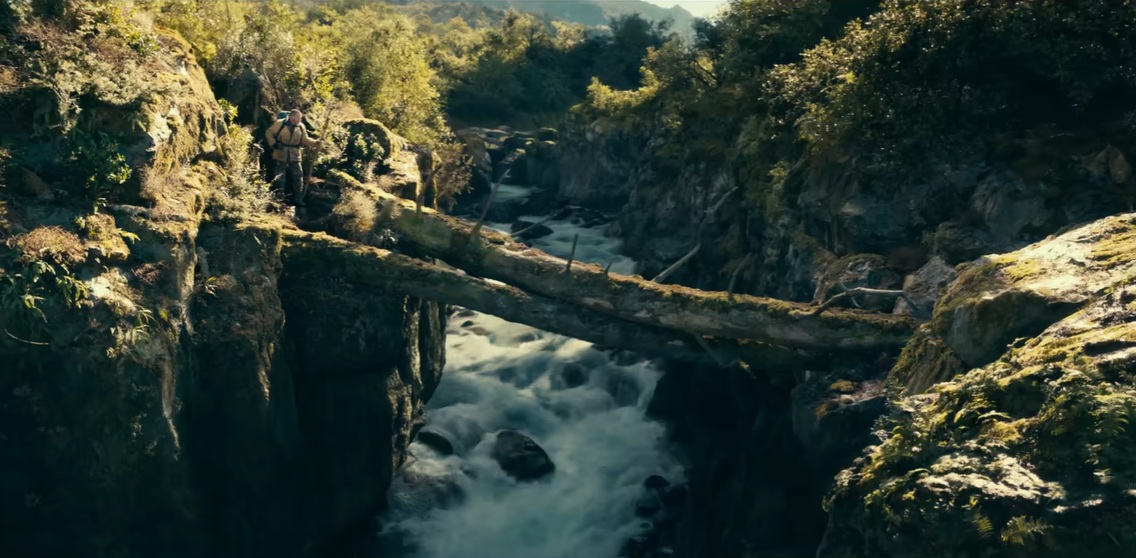
Walter also understands the land better than James does. His warning gives the movie its title and establishes the wilderness as something far more dangerous than a scenic backdrop: “This region here is the heart of the beast. Most folks learn that the hard way.” James soon discovers exactly what Walter means. When the seaplane crashes deep in the Alaskan wilderness, the pair lose access to most of the equipment and support that might have made the journey manageable.
From there, the film strips the story down to its essentials. James has his military training. Odin has his instincts and years of conditioning. More importantly, they have each other. The route ahead stretches for 58 miles through dense forest, freezing temperatures, powerful rivers, steep terrain, and wildlife that has no reason to fear either of them. The farther they travel, the less the movie feels like a conventional action adventure and the more it becomes a test of whether two damaged veterans can keep one another alive.
Why the Film Does Not Follow the “Does the Dog Die?” Formula
One of the smartest choices in Ayer’s direction is the way the film handles the audience’s fear for Odin. Survival stories involving animals have a familiar trick available to them: establish the pet as lovable, put the characters in danger, and then use the animal’s death as an emotional hammer. It works, but it is also predictable. Heart of the Beast understands that viewers are waiting for exactly that move.
Instead, the film uses a framing device that begins close to the end of the story. The audience receives visual information suggesting that Odin makes it through the ordeal before the movie returns to the beginning of the journey. That does not remove the danger, but it changes the nature of the suspense. You are no longer sitting there wondering whether the dog will be sacrificed for a final emotional punch. The tension shifts toward how James and Odin will survive and what the journey will cost them.
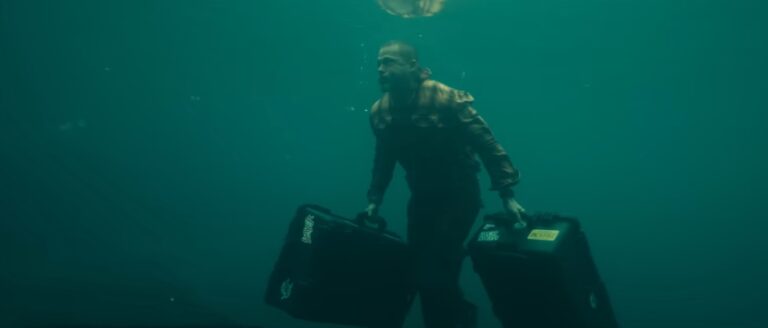
That choice also allows the relationship between them to carry more weight. When they face violent rapids, dangerous falls, exhaustion, and aggressive predators, the question is not simply whether one of them will die. It is whether either can keep going when the other is already close to breaking. Their dependence on one another becomes part of the survival strategy.
The Final Miles: When Survival Becomes Something Personal
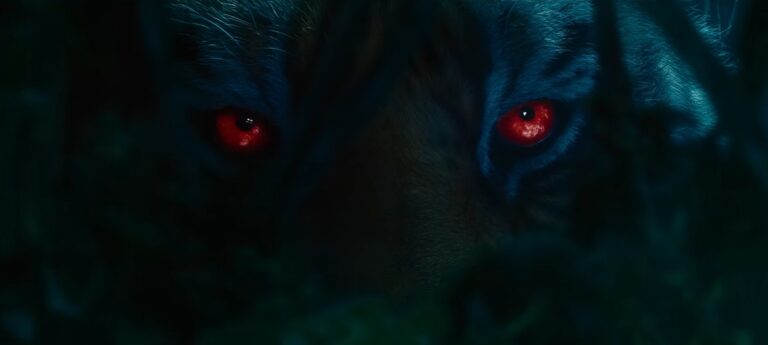
By the time James and Odin approach the final stretch of their journey, the physical damage is severe. James has been battered by the terrain and eventually suffers a brutal wolf attack. His injuries are not brushed aside so the story can get to the next action scene. They accumulate. Every mile becomes harder, and the cold makes even basic movement dangerous.
Eventually, James collapses. Exhaustion, hypothermia, and blood loss have pushed him past the point where determination alone can keep him moving. This is where the movie changes gears. Until this point, survival has been about navigation, instinct, and military discipline. Now it becomes a question of whether Odin can keep James alive when James is no longer capable of saving himself.
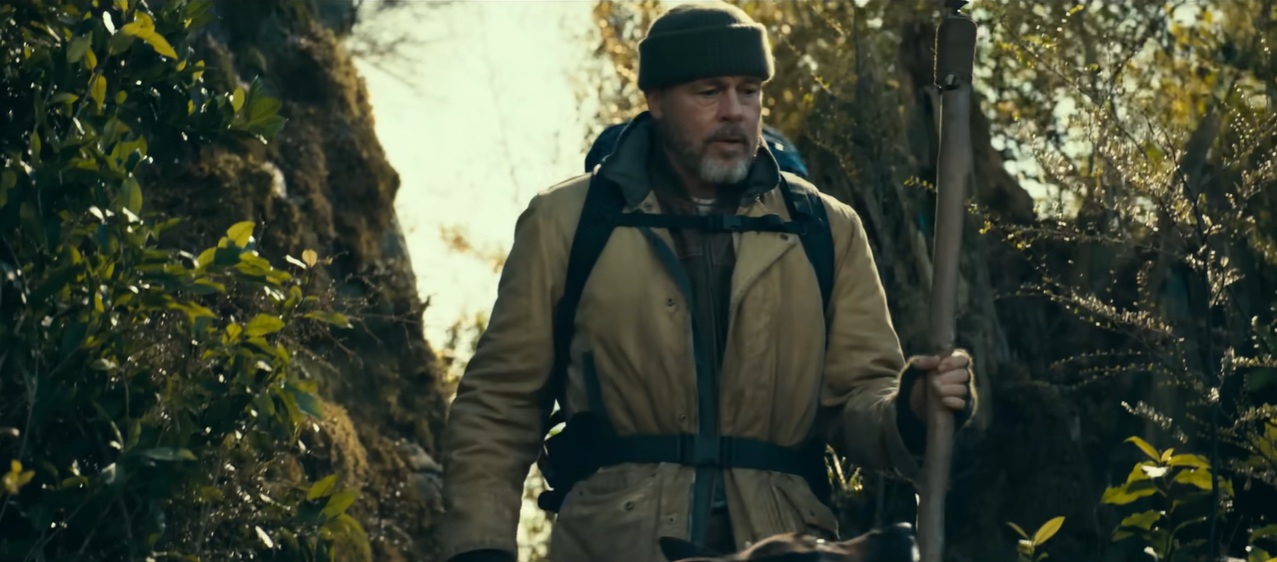
Odin refuses to leave him. The behaviors drilled into him during his military service suddenly become crucial, as he attempts to keep his handler conscious and responsive. It is one of the film’s most important reversals. James spent much of the journey protecting Odin, but in the moment when everything finally falls apart, Odin becomes the one carrying the responsibility.
When James briefly wakes and believes Odin may have been killed, the emotional pressure that has been building throughout the film finally breaks. Pitt plays the moment without turning it into a conventional movie speech. There is fear, confusion, relief, and something almost childlike in the realization that Odin is still alive. For a character who has spent years keeping his emotions locked away, the reaction matters because there is nowhere left to hide.
The final miles therefore become less about physical distance than mutual sacrifice. James refuses to abandon Odin, and Odin refuses to abandon James. Neither relationship nor loyalty is treated as a sentimental accessory to the survival plot. It is the thing that keeps the plot moving.
Ending Explained: Do James and Odin Survive?
Yes. James Belmont and Odin both survive.
The two finally reach the outer edge of civilization and are rescued after enduring the full 58-mile journey. They are injured, exhausted, and visibly changed by what happened, but they make it out alive. The movie does not turn Odin into a tragic sacrifice, and James does not have to continue the journey without him.
That survival is important because the film has been building toward something beyond the mechanics of getting home. The Alaskan wilderness functions as an external expression of James’s psychological state. The cold, isolation, predators, and constant threat all mirror the trauma he has spent years carrying. He cannot simply shoot or outsmart that kind of enemy. He has to keep moving through it.
Odin becomes central to that process. James does not recover because the wilderness somehow erases his past. He survives because his relationship with Odin gives him a reason to keep confronting it. The journey forces him to rely on another living being instead of retreating into the isolation that has defined so much of his life.
So the rescue carries a second meaning. James and Odin are physically brought back into civilization, but James also reaches a point where his memories no longer have to dictate the rest of his life. The film leaves them with the possibility of entering their later years without being completely controlled by what happened during their military service. It is not a miraculous cure for trauma. It is something quieter: a reason to keep living with it.
When Will Heart of the Beast Stream Online? Brad Pitt Movie Streaming Release Date Explored
The Production Conflict Helps Explain the Film’s Tone
The emotional balance of Heart of the Beast becomes more interesting when the production history is considered. Reports from outlets including Puck described disagreements between Brad Pitt and David Ayer over the final shape of the movie. Ayer has built much of his career around muscular crime and war dramas such as End of Watch, Fury, and Suicide Squad, so his instincts naturally pushed toward a harder, more action-driven version of the material.
Pitt, who also produced the project alongside Damien Chazelle and Olivia Hamilton, reportedly wanted the relationship between James and Odin to remain at the center of the film. That difference matters because it can be felt in the finished movie. The action is harsh and physical, but the story repeatedly slows down long enough to show what the journey is doing to the characters.
The result sits somewhere between those two approaches. The wilderness sequences have the rough physicality associated with Ayer’s work, while the emotional structure is built around James and Odin rather than spectacle. That balance also explains why the ending works as more than a conventional rescue sequence. The physical suffering gives the finale weight, but the relationship gives it meaning.
Why the Ending Works
Heart of the Beast could have taken the easy route. It could have killed Odin and used James’s grief as the final emotional blow. It could have turned the wilderness into an endless parade of action scenes. Instead, the film makes survival itself the point, while still allowing the journey to hurt.
James and Odin do not walk out untouched. They are scarred by the experience, just as they were already scarred before the plane went down. What changes is that James no longer has to face those scars alone. The wilderness nearly destroys them, but it also forces James to accept the bond he had been relying on all along.
That is why the final reunion with civilization carries more weight than a simple happy ending. James gets to go home. Odin goes with him. After everything the film puts them through, that is enough. The story does not need another tragedy to prove that the journey mattered.