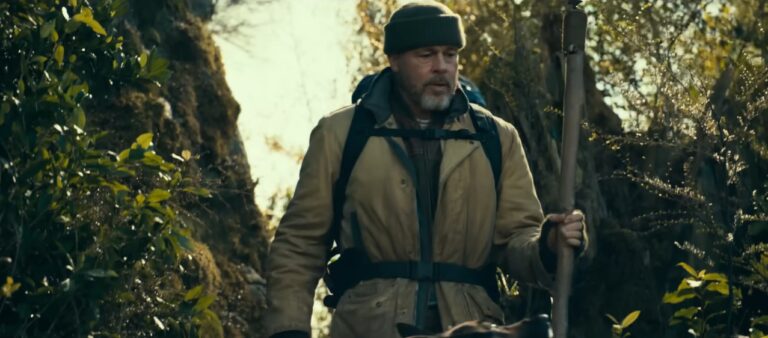
The Vvaan Movie 2026 Plot Analysis: Folklore, Goddess Mythos, and Ending Theories Explained
There is something immediately intriguing about The Vvaan: Force of the Forrest. On paper, it sounds like a familiar setup: an urban skeptic returns to a rural community, laughs off its old beliefs, crosses a forbidden boundary, and discovers that the people he dismissed may have been right all along. But the trailers suggest a film that is aiming for something more specific. Its mythology is tied to Bihar, the Van Devi tradition, Chhath Puja, and the idea that a forest can be protected by forces that exist well outside ordinary human logic. The film is scheduled to reach theaters on September 25, 2026, with Sidharth Malhotra and Tamannaah Bhatia leading a cast that also includes Sunil Grover, Shweta Tiwari, Anup Soni, and Maniesh Paul.
The trailer also makes one thing much clearer than the earlier promotional material did: this is not simply a story about a man wandering into a haunted forest. The central conflict involves development, land, tradition, and a sacred woodland that the locals believe should not be disturbed. That gives the supernatural material a human argument underneath it. The monsters may be frightening, but the more interesting question is why the forest needs to fight back in the first place.
The Core Story: When Modern Logic Meets an Old Rule
Sidharth Malhotra plays a city-bred man who approaches the world from a practical, skeptical point of view. He and Tamannaah Bhatia’s character are introduced as a married couple living in Mumbai, far removed from the rituals and beliefs that eventually pull them toward Bihar. She has a stronger connection to faith, while he initially treats those traditions with considerably more distance. The contrast is simple, but it gives the movie its emotional engine: one character believes there may be something sacred waiting in the forest, while the other wants an explanation for everything he sees.
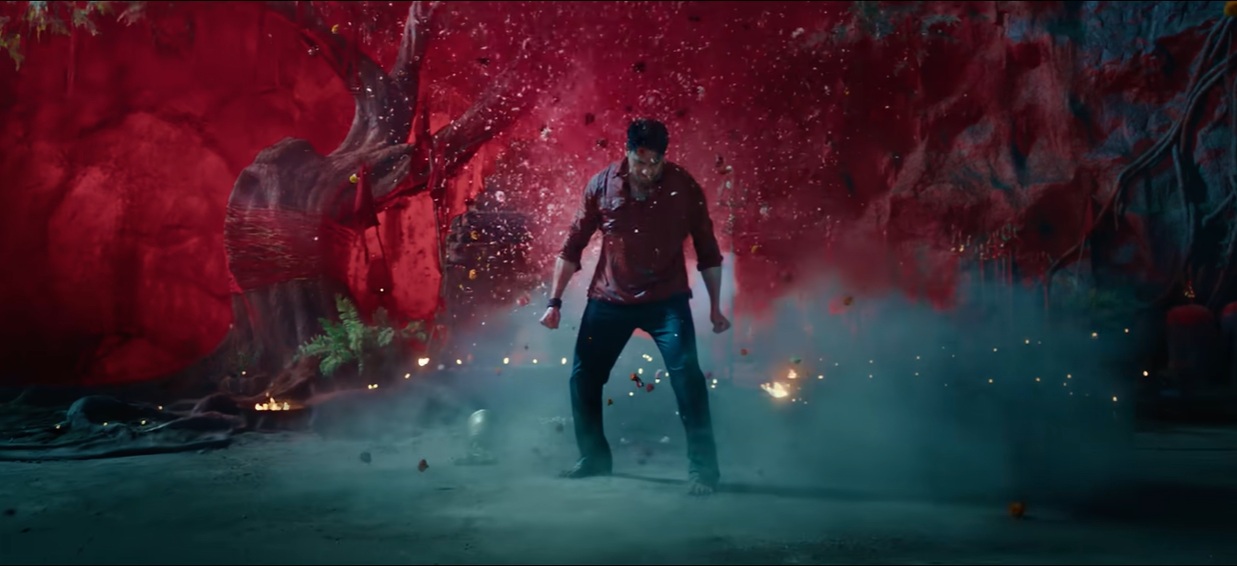
The mysterious forest known as Vvaan comes with a rule that the villagers take very seriously: after sunset, nobody should enter. The teaser and trailer repeatedly build around that warning, presenting the woodland almost as though it has its own memory. People who go inside at night do not simply get lost. They are said not to return. The protagonist, naturally, does not take this seriously enough.
And that is where the story starts turning.
The latest trailer frames the conflict around the forest, its temple, and plans connected to development. Sidharth’s character is drawn into the dispute rather than simply stumbling across a supernatural location by accident. Once strange events begin, the rational explanation he has relied upon starts falling apart. The film then shifts from a relatively grounded conflict over land and tradition into a fantasy thriller involving supernatural forces known as the Bhuttakas and a mysterious divine presence associated with the forest.
The interesting part is that the forest itself appears to function almost like a character. It is not just a backdrop filled with fog and ominous trees. The promotional material treats it as territory with rules, history, and consequences. That makes the development conflict more important than it might initially appear, because the supernatural threat seems connected to what happens when those boundaries are ignored.
Van Devi, Chhath Puja, and the Goddess Mystery
This is where The Vvaan separates itself from a generic haunted-forest movie. The story draws heavily from local folklore surrounding the Van Devi Temple in Bihta, Bihar. The temple is associated with the belief in a forest goddess who protects the surrounding region, and that local tradition forms an important part of the film’s fictional world.
Chhath Puja is another major piece of the puzzle. The film does not appear to be using the festival merely as decorative cultural background. A song titled “Chhathi Maiya” places Tamannaah’s character directly within the ritual, while the sequence also shows Sidharth’s character questioning the depth of her faith. The song becomes part of the larger story about belief, marriage, and the strange events surrounding their return to Bihar.
There is also a possible Durga connection, although this should still be treated as a theory rather than a confirmed explanation of the film’s mythology. Earlier teaser coverage pointed toward imagery associated with Durga, including the suggestion of a divine protector whose mount is a tiger. That detail has encouraged viewers to look for a larger mythological identity behind the force inhabiting the forest.
The safer reading, at least before the full movie arrives, is that The Vvaan is deliberately combining several layers of Indian folklore rather than announcing a single straightforward deity from the beginning. The forest goddess, Chhathi Maiya imagery, the hints toward Durga, and the Bhuttakas all create a mythology that appears to be intentionally larger than one supernatural villain.
Sidharth Malhotra and the Skeptic’s Transformation
Sidharth’s character is built around disbelief. That matters because the film needs someone who can look at the villagers’ warnings and say what the audience might initially be thinking: there has to be a rational explanation for all this.
Then the forest starts answering back.
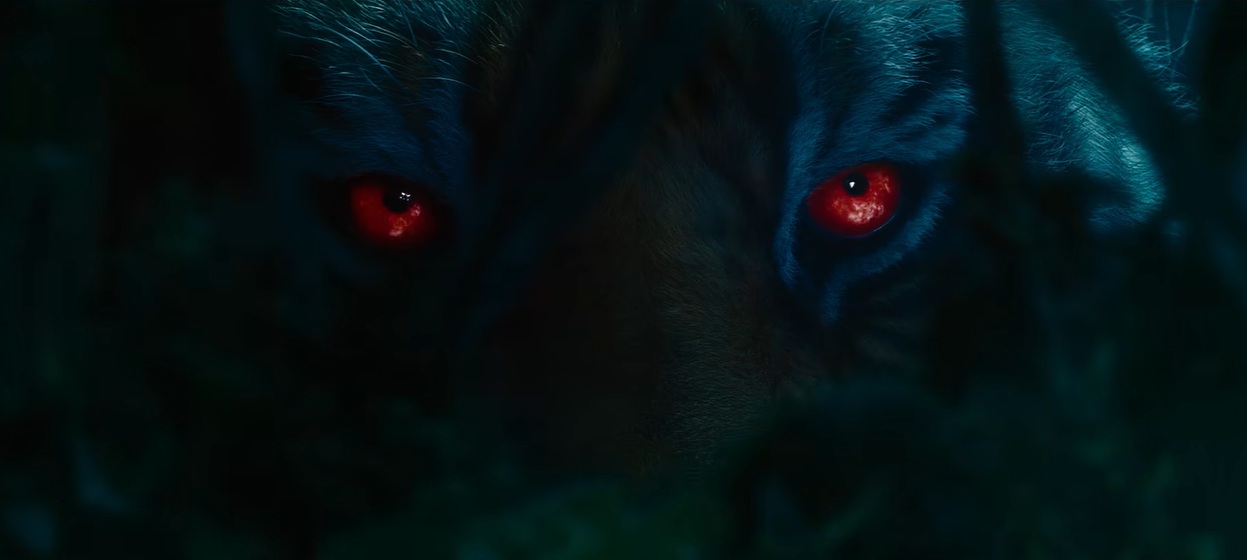
The trailer suggests that his transformation may involve more than simply learning to respect local traditions. After a strange incident in the forest, he appears to experience visions or some connection to the past, and Tamannaah’s character tells him that his relationship with the forest runs deeper than he realizes. There are also glimpses of him adopting a far more mythic, warrior-like persona later in the story.
That creates an obvious question for the final act: does he become a protector because he finally believes in the supernatural, or because he discovers that he was connected to the forest all along?
The second possibility would give the character arc a much stronger payoff. A simple “skeptic becomes believer” story is familiar territory. A revelation involving ancestry, reincarnation, memory, or an old connection to the forest would give the earlier scenes a different meaning on a second viewing. The trailers have deliberately shown enough strange imagery to make that possibility plausible without confirming it.
Tamannaah Bhatia’s Character May Be More Important Than She Looks
Tamannaah’s role has been kept comparatively mysterious, but the promotional material has established one important detail: she is Sidharth’s wife and she has a much stronger relationship with faith than he does. Her belief in Chhath Puja and her conviction that the goddess has called them to Bihar put her in a strange position within the story. She is not simply waiting for the male protagonist to discover the truth.
She may actually understand the situation before he does.
The trailer shows her helping him make sense of his connection with the forest, while her character is also closely associated with the Chhath sequences. That gives her a narrative function beyond being the romantic lead.
There is still room for a larger reveal. The earlier promotional campaign encouraged speculation about whether her character might possess a deeper ancestral or spiritual connection to the forest. Nothing released so far proves that she is an avatar or supernatural intermediary, so those theories should remain exactly that: theories. But the way the trailers position her suggests that she will be central to whatever explanation the movie eventually gives for the forest’s mythology.
The Supporting Cast Adds a Different Tone
The supporting cast is one of the more interesting choices here because The Vvaan does not appear to be playing the material as straight horror from beginning to end. Deepak Kumar Mishra’s background with grounded comedy, particularly through Panchayat, makes the presence of performers such as Sunil Grover and Maniesh Paul especially notable.
The currently available cast information identifies Sunil Grover as Deepak, Shweta Tiwari as Sushila, Anup Soni as Shashi Bhaiya, Maniesh Paul as VP, and Durgesh Kumar as Patrakar.
That mix could become important once the film shifts between domestic comedy, rural character drama, romance, and supernatural horror. If the humor is handled well, it could make the village feel lived-in before the story turns darker. If it is pushed too hard, though, it could weaken the atmosphere that the trailers have worked so hard to establish.
That balance is probably one of the film’s biggest tonal risks.
What the Trailer Suggests About the Ending
There is no confirmed ending yet, so any discussion here has to remain speculative. Still, the promotional material gives us a few pieces worth connecting.
The first possibility is the most straightforward: Sidharth’s character learns that the forest’s supernatural force is real and becomes its protector. The official synopsis already points in that direction, describing a rational man who defies the forbidden forest, awakens a divine force, and is eventually pushed into protecting his people.
A second possibility is more complicated. The forest may not be attacking the village at all. It may be reacting to human interference. The trailer’s development-versus-tradition conflict makes that interpretation particularly interesting because the supernatural threat could function as a consequence rather than a conventional villain.
Then there is the reincarnation theory. Some trailer footage appears to connect Sidharth’s character with events from the past, while the mysterious warrior imagery raises questions about whether his relationship with the forest predates his current life.
If that turns out to be the central reveal, several seemingly disconnected pieces of the story could suddenly line up: the forest, the goddess, the protagonist’s visions, the ancient rules, and his eventual transformation.
The weakest possible version of this twist would simply use reincarnation as an excuse for spectacle. The stronger version would make it part of the film’s argument about memory, cultural inheritance, and what happens when someone cuts themselves off from the place their family came from.
The Real Conflict May Be Development Versus Sacred Land
This is probably the most useful way to read The Vvaan before seeing it.
The movie is not presenting modernization as an abstract villain. Instead, the trailer places development directly against a forest tied to religious belief and local identity. That creates a conflict where neither side can be reduced to a single sentence. Development brings roads, money, construction and change. The forest represents tradition, ecological limits, memory and faith.
The supernatural elements simply make that conflict impossible to ignore.
That is also why the film’s use of Bihar matters. The Van Devi folklore gives the story a particular cultural location instead of dropping a generic cursed woodland into an unnamed Indian village. The filmmakers are drawing from a real regional tradition and reshaping it into commercial fantasy cinema.
Whether that cultural material becomes genuine world-building or just visual decoration will depend heavily on the full film.
Production, Music, and the Visual Approach
The production has already gone through multiple release-date changes. The film was initially announced for a Chhath 2025 release, before moving through later dates and eventually settling on September 25, 2026.
That long road to release is worth remembering when looking at the finished movie. The Vvaan has had plenty of time to accumulate expectations, theories, reshoots speculation, and promotional material. By the time audiences enter theaters, they will already have a fairly detailed picture of its central mystery.
The music is also doing a lot of narrative work. The devotional “Chhathi Maiya” track connects the film directly to Bihar’s cultural traditions, while the trailer’s score and ritual imagery push the story toward fantasy and horror. The result is a deliberately unusual mixture: married-couple drama, rural comedy, folklore, action, religious imagery, and supernatural mystery all occupying the same film.
That mixture could either give The Vvaan its personality or make the movie feel overloaded. There is not much middle ground.
Why the Film Could Work for International Audiences
For viewers outside India, the appeal is fairly easy to understand. The Vvaan is using a very local legend as the foundation for a story built around universal conflicts: skepticism versus faith, development versus preservation, and an outsider discovering that the world he understands is much smaller than he thought.
The comparison to films such as Midsommar or The Witch is useful only in the broadest sense. Those movies also use folklore and ritual to create a world where outsiders cannot simply impose their own logic. But The Vvaan is drawing from a distinctly Indian cultural framework, particularly Bihar’s traditions surrounding Chhath and Van Devi. That difference is important because the film’s identity depends on those details rather than on copying the structure of Western folk horror.
The theatrical release on September 25 gives the movie a chance to establish itself before the inevitable streaming conversation begins. Prime Video is listed as the streaming partner in current movie databases, although the theatrical release is the immediate focus of the campaign.
Is The Vvaan Movie Worth Watching In Cinema? Honest Review, Plot, And Audience Reaction
The Big Question Before September 25
The most interesting question is not whether the goddess is real. The trailers have already made it fairly obvious that something supernatural is happening.
The real question is what the supernatural force represents.
If the forest is simply home to an angry deity and a collection of monsters, the story risks becoming a conventional fantasy adventure dressed in local folklore. If the forest instead becomes the physical expression of forgotten history, ecological limits, faith, and inherited responsibility, the same basic plot suddenly has more weight.
The trailers are pointing toward the second interpretation, but the movie still has to earn it.
For now, The Vvaan: Force of the Forrest has built its mystery around a very old cinematic question: what happens when someone laughs at a warning that generations of people have learned to respect? The answer, judging from everything released so far, is that the forest remembers. And by September 25, we should finally find out exactly what it remembers.